Storytelling and journey mapping are two of the most powerful tools in the world of UX design, which complement each other perfectly. Storytelling humanizes design, while user journey maps provide a structured framework to visualize how users interact with your product. Together, they create a roadmap that's not only functional but emotionally engaging.
This blog dives into how storytelling enriches user journey maps and offers actionable strategies to map compelling user experiences.
Why Storytelling Matters in User Journey Mapping
A user journey map is more than a flowchart. It is a narrative that tracks the user's experience, from first interaction to goal achievement, with storytelling added to make it dynamic by:
1. Highlighting Emotions: Stories reveal what users feel at each stage, from frustration to curiosity and satisfaction.
2. Focus on User Goals: A story keeps the focus on what users are trying to achieve, thus guaranteeing a user-focused design.
3. Building Empathy: Story-driven maps help designers enter users' shoes, enabling a better understanding of what users need.

Components of a Story-Driven User Journey Map
To effectively tell a story through journey maps, include the following elements:
1. Persona as the Protagonist
Each narrative requires a character with whom the audience can identify. Create rich personas that represent your intended users, including their demographics, motivations, and pain points.
2. Context as the Setting
The journey occurs within certain contexts—whether it's browsing on a mobile app while commuting or researching products on a desktop at home. It is essential to understand these contexts for relevance.
3. Touchpoints as the Plot Points
Determine where all the interactions with the product occur, including the landing pages, search function, and checkout process. These interaction points are the foundation for the story.
4. Emotions as the Conflict
Determine where confusion, frustration, or euphoria takes place. The mapping of those emotions will help identify points where friction occurs and where one can improve.
5. Resolution as the Outcome
The trip ends when the user reaches his desired destination: makes a purchase, signs up for a service, solves a problem.

Crafting a Story-Driven Journey Map
1. Conduct Research to Build Authentic Narratives
Start with user research to get real-world insights. Interviews, surveys, and analytics can reveal user behaviors and challenges.
2. Visualize the Story
Use storytelling techniques to present the journey:
Beginning: Introduce the user's goal or challenge.
Middle: Map interactions and potential roadblocks.
End: Highlight how your product resolves the user's challenge.
3. Layer Emotions and Pain Points
Highlight emotional peaks and troughs on the map. For instance, frustration might arise from long form fields, whereas satisfaction is derived from fast-loading pages.
4. Focus on Key Metrics
Keep track of conversion rates, time spent on tasks, or bounce rates to validate and enhance your narrative.
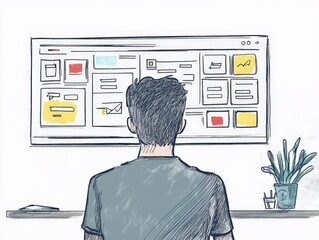
Example: Storytelling in a Journey Map
Imagine mapping the journey of a user who is trying to book a fitness class through an app:
Beginning: A busy professional deciding to focus on health, yet having a hard time finding options that are flexible.
Middle: They browse through the application, and the filters are clear, but the payment options are few.
End: The application provides a seamless booking experience and allows the user to receive confirmation from a friendly email, thus boosting satisfaction.
This narrative identifies some key moments to optimize, like offering more payment options or simplifying the booking flow.
Benefits of Storytelling in Journey Mapping
1. Enhanced Collaboration Across Teams
A story-driven journey map can help designers, developers, and stakeholders better mutually understand goals and priorities.
2. Prioritized Problem-Solving
Stories help identify friction areas and prioritize them, offering targeted solutions based on actual user needs.
3. Improved User Retention
Emotionally engaging narratives resonate with the users, thereby increasing loyalty and long-term satisfaction.
Avoiding Common Pitfalls
1. Overloading with Details
A journey map does not have to be everything. Identify the most significant user journeys for clarity and effectiveness.
2. Neglecting Updates
User behaviors evolve over time, so revisit and update your journey maps regularly in order to mirror changing needs and contexts.
3. Ignoring Accessibility
Ensure your map considers users with diverse abilities to create inclusive experiences.
Tools to Create Story-Driven User Journey Maps
1. Figma: For collaborative, design-focused mapping.
2. Miro: Ideal for visually mapping narratives with team input.
3. UXPressia: Offers templates tailored for journey mapping with storytelling elements.
Conclusion
Combine storytelling with user journey mapping and unlock meaningful, user-centered designs. Stories give maps a depth, empathy, and emotion that translate data into actionable insights.
By mapping the narrative of the user, you visualize interactions and expose opportunities for designing experiences that speak personally. Engage with storytelling in your UX design process, and you'll soon find that user experiences are turning into unforgettable journeys.
Level up your UI/UX skills! Learn to create stunning interfaces and seamless user experiences with our Advanced UI/UX Design Course. Boost your career and design products that stand out.
Enroll today at Kaarwan for more insights!
FAQs
1. What is the role of storytelling in user journey mapping?
Storytelling adds depth and emotion to user journey maps by humanizing data, highlighting user emotions, and creating relatable narratives. It helps designers understand user needs and craft more engaging experiences.
2. How do you create a story-driven user journey map?
To create a story-driven user journey map, start by defining a persona, map touchpoints, layer in emotions and pain points, and visualize the journey using storytelling techniques like beginning, middle, and end.
3. What are the key benefits of integrating storytelling into UX design?
Storytelling fosters empathy, simplifies complex processes, aligns teams on user goals, and improves user retention by creating emotionally engaging experiences.
4. What tools can be used for creating story-driven user journey maps?
Popular tools include Figma for collaborative design, Miro for visual mapping, and UXPressia for tailored journey mapping templates.
5. Why should user journey maps be updated regularly?
User behaviors and needs evolve over time. Regular updates to journey maps ensure they remain relevant, accurately reflect current user experiences, and adapt to new challenges or opportunities.